
Ingredients of Change: Engaging Employees for a Sustainable Future
Guided by the Beckhard-Harris change formula (Dissatisfaction × Vision × First Steps > Resistance), participants of this workshop, hosted during the E4S Showcase Summit in Lausanne, explored how organizations can more effectively engage employees in sustainability efforts.
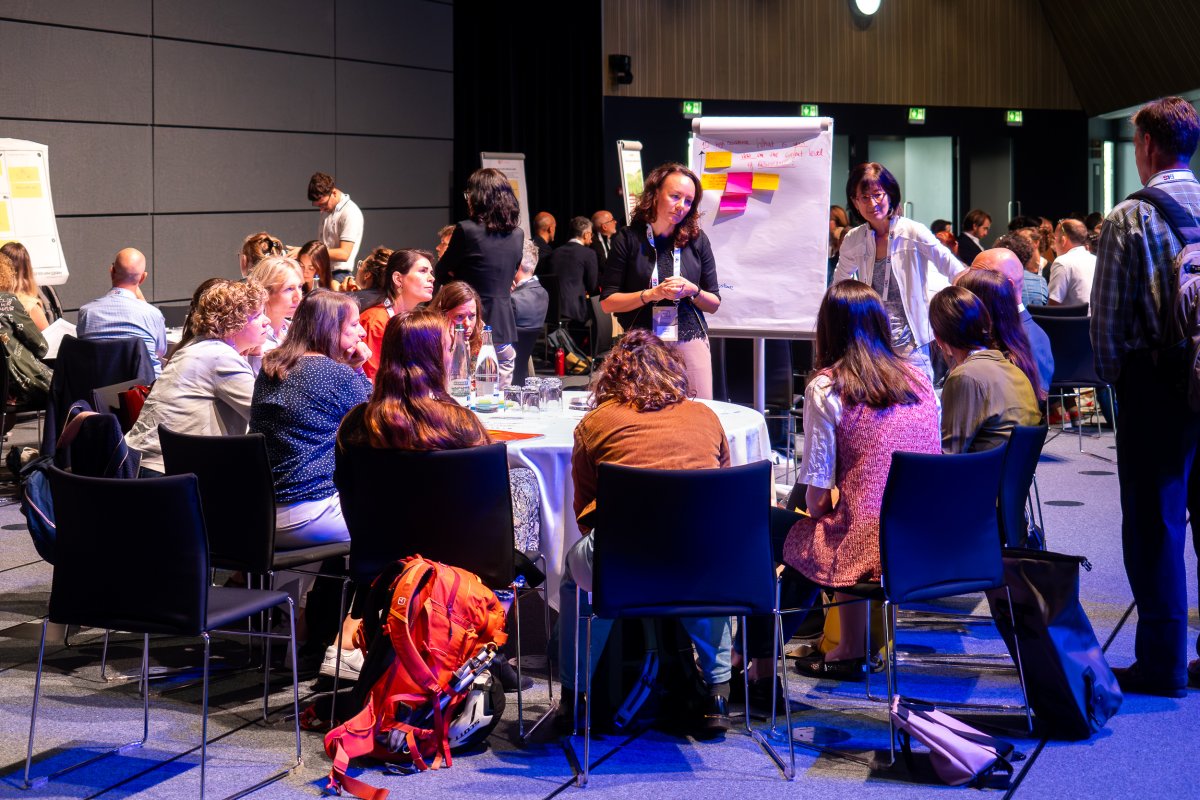
Photo credit: Enterprise for Society (E4S)
Consistent feedback on the level of resistance
To kick off the discussion, participants were asked to reflect on the current level of resistance among organizations in their network to adopting sustainable practices. Overall, participants agreed that resistance to sustainability initiatives is relatively high. When asked to rate resistance on a scale from 1 (low) to 10 (high), most participants picked the score of 7.
Vision as the key lever in reducing resistance
The Beckhard-Harris change formula guided the discussion to further explore the root causes of limited engagement. The model assumes that organizations or individuals only change when the combined strength of three factors, Dissatisfaction, Vision, and First Steps, is greater than the existing Resistance to change:
- Dissatisfaction with the current situation that people want to change
- Vision for a future state that is both better and achievable
- First Steps and an acceptable action plan to achieve the vision
The outcome of the discussion was that the most powerful element in the equation is an organization’s Vision for its sustainability agenda. Without a clear Vision, neither Dissatisfaction with the current state nor the First Steps toward change are sufficient to drive transformation.
Employees’ role in the vision and action plan
When discussing success criteria for a Vision that can drive sustainable transformation within organizations, participants emphasized that it should go beyond outlining broad environmental and social benefits. It must clearly articulate the underlying problem, present tangible advantages for both the organization and its employees, and remain realistic and attainable to gain acceptance among the employees. It should be supported by a concrete action plan co-created with employees, and reinforced by role models who can inspire and accelerate implementation.
The role of external stakeholders
Participants also examined the influence of external stakeholders, such as shareholders, customers, and funders, in driving change. It was felt that these stakeholders play a key role in mobilizing leadership commitment and accountability for non-financial performance, which in turn supports other enablers that foster genuine employee engagement.
To learn about E4S Showcase Summit go to: https://e4s.center/showcase/